
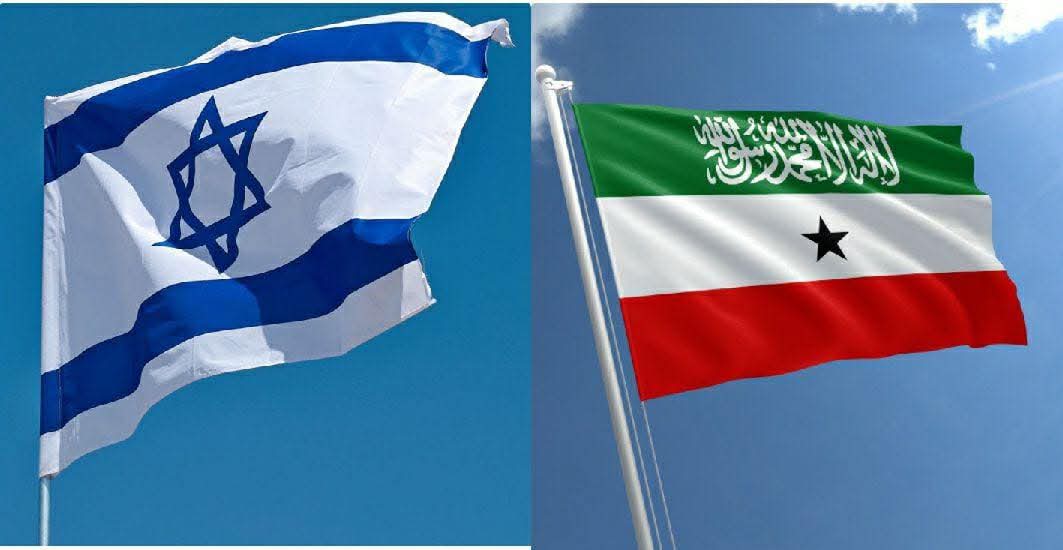
History rarely arrives with ceremony. More often, it turns into a decision that brings diplomacy closer to what people already know on the ground. Israel’s formal recognition of the Republic of Somaliland is one of those decisions. It moves Somaliland from prolonged diplomatic limbo into the realm of normal state relations, where the debate is no longer about existence, but about outcomes.
This recognition also matters because it is not framed as symbolism alone. It signals a relationship intended to function, anchored in formal diplomacy and practical cooperation across sectors that shape national resilience and everyday life.
A correction in international consistency
For years, international engagement in the Horn of Africa has followed a familiar habit. Functioning governance has been treated as routine, while breakdown has been treated as inevitable. Somalia’s federal institutions retained the privileges of recognized statehood. Somaliland, stable and largely self-financed, was left in indefinite suspension despite meeting the everyday tests of governance and security.
That posture was not neutral. It preserved legal fiction because it was administratively easier for outsiders to manage. Recognition interrupts that pattern by treating performance as a basis for policy, not an inconvenience to be ignored.
Somaliland’s case is not a fashionable secession. It is the reassertion of sovereignty after a voluntary union in 1960 collapsed into dictatorship, mass violence, and political betrayal. Denying recognition did not protect regional order. It postponed reality and rewarded a status quo that did not reflect conditions on the ground.
Why Israel moved, and why it matters beyond bilateral ties
States do not choose partners only out of sentiment. They choose them because geography and reliability create opportunities.
The Middle East and the Horn of Africa are connected by the Red Sea. In recent years, land conflict and maritime insecurity have merged into one set of risks: drones and missiles that disregard borders, smuggling networks that thrive where coastlines are weak, and proxy rivalries that spill into shipping lanes. In that environment, dependable partners near chokepoints become a serious geopolitical asset.
Somaliland sits close to the Bab al Mandab, the narrow gate linking the Red Sea to the Gulf of Aden. When this corridor is threatened, shipping reroutes, costs rise, supply chains tighten, and political shockwaves travel far beyond the region. Berbera’s rise as a commercial hub is also a strategic fact. A stable coastal authority near this corridor is not only a beneficiary of security. It can be a contributor to it.
That is the central logic of the new relationship. It should not be built on patronage. It should be built on partnership.
What Somaliland brings: stability that is owned, not rented
There is a difference between stability that is rented and stability that is owned. Across the region, security has often relied on external deployments and donor scaffolding that weakens when attention shifts. Somaliland’s internal order has been built largely through local legitimacy: institutions that function, political competition bounded by law, and a security culture shaped by necessity and restraint.
A Kissingerian point is relevant here. Durable order is not the absence of conflict. It is the presence of structures capable of containing it. Somaliland has spent decades building those structures, and that record is part of what recognition now validates.
From recognition to a practical agenda
The value of Somaliland–Israel relations will be measured by what they deliver in practice, quietly and professionally, with benefits that extend beyond both sides.
Recognition should move quickly from symbolism to routine diplomacy: full, functional embassies with accredited ambassadors, consular services that make travel and business predictable, and binding agreements that give trade and investment legal certainty. Recognition becomes real when it becomes ordinary.
A serious agenda can include:
Maritime security and early warning
Joint maritime domain awareness, coastal surveillance, port security training, and cooperation against smuggling and piracy can reduce risk across sea lanes used by Africa, the Gulf, Europe, and Asia. A safer corridor benefits the world economy, not only the states that border it.
Trade corridors that reduce fragility
The Berbera Corridor linking the port to Ethiopia and the wider Horn is not just infrastructure. It is a stability mechanism. Corridors move goods, but they also move incentives away from illicit economies and toward employment, revenue, and interdependence.
Technology cooperation with public purpose
Cooperation in water systems, agriculture, health, and innovation can strengthen resilience during drought cycles and economic shocks. These are the sectors where politics is tested in daily life, not in communiqués.
Humanitarian reliability
A predictable port with secure warehousing and clear customs procedures can act as a dependable entry point for relief during drought, displacement, or regional supply disruptions. Quiet reliability saves lives and reduces panic.
Managing backlash without losing the opportunity
Recognition will draw resistance. Some actors will frame it as an affront to territorial integrity. Others will try to pull it into their rivalries. The most effective response is calm discipline, not escalation.
A durable partnership also requires guardrails: transparency, public accountability, and a clear commitment that cooperation will not be used to export conflict into the Horn. A relationship that cannot be explained to the public is a relationship that will not last.
A closing thought
For decades, Somaliland’s stability was treated as routine while dysfunction elsewhere drew endless attention and deference. Recognition begins to reverse that signal. It says that institutions matter, elections matter, and governance can be treated as more than a footnote.
This is not an endpoint. It is a beginning: full diplomatic relations, practical cooperation on Red Sea security, and deeper trade and technology ties that serve public welfare. The next audience is not only Jerusalem and Hargeisa. It is also Addis Ababa, Nairobi, Pretoria, Abuja, Cairo, and the African Union. The question is whether competence will continue to be treated as routine or finally treated as a basis for recognition and durable order.
more recommended stories
 My Country, Somaliland, Recognized
Our first embassy will be in.
 The Arithmetic of Erasure: Deconstructing Mogadishu’s Narrative
By Abdiwahab Sancawl When the UN.
 Somaliland Recognition: A Litmus Test for Israel’s Post Gaza Global influence
Israel’s recognition of Somaliland, a long.
-
Awdal’s Strategic Role in Somaliland’s Statehood and National Stability
The people of Awdal, particularly those.