
26 December 2025 will be remembered as a date when a long-running diplomatic paradox began to unwind. For thirty-five years, Somaliland operated with many of the attributes of statehood. It governed its territory, built institutions, maintained internal order, and subjected political authority to elections. Yet it remained treated as administrative fiction, trapped in a form of international suspension that rewarded inertia and punished performance.
Israel’s formal recognition of the Republic of Somaliland changes the texture of that reality. It is not simply a symbolic gesture or an exchange of pleasantries between capitals. It is a deliberate political act with regional consequences, and it signals that Somaliland’s status is no longer a question to be deferred indefinitely. A precedent has been introduced, and once a precedent exists, others must decide whether they will resist it, imitate it, or adapt to it.
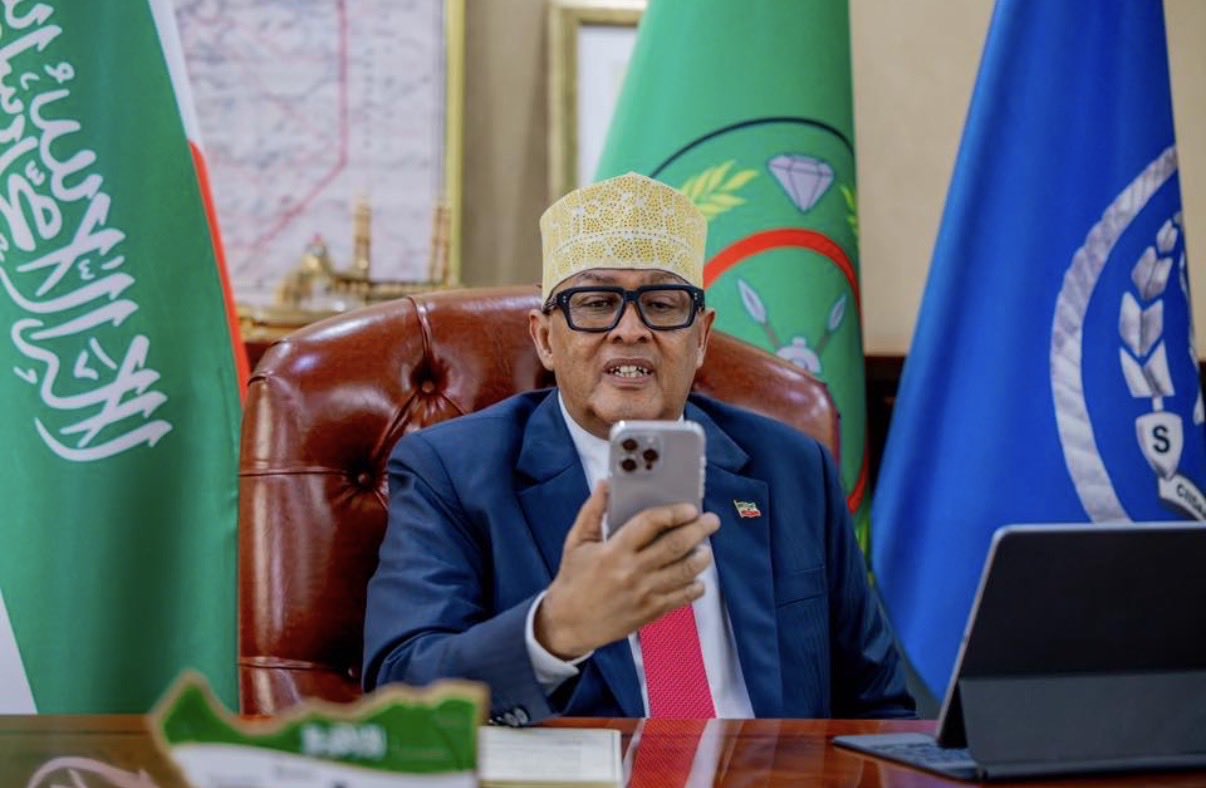
At the center of this turn is leadership, specifically the difference between a politician managing the present and a statesman shaping the future. President H.E. Dr. Abdirahman Mohamed Abdillahi (Irro) entered office at a moment when Somaliland’s diplomacy risked becoming a permanent waiting room. Many expected continuity: respectful engagement, repetitive arguments, and the slow grind of appeals to institutions that had already made their caution a policy. Instead, his early approach has been defined by a calm impatience with closed doors.
The record suggests he understood an old truth of diplomacy: legitimacy is not merely asserted, it is translated. Somaliland has possessed legitimacy at home for years, expressed through constitutional order, public consent, and a political culture that has repeatedly accepted competition and alternation. Yet legitimacy without translation can remain local, admired by observers but discounted by decision-makers. President Irro’s achievement has been to begin turning internal credibility into external movement, not through spectacle, but through disciplined statecraft.
The opening with Israel is best read as a calculation rooted in mutual interests, not sentiment. Israel has its own strategic concerns around maritime security, trade routes, and the widening contest for influence along the Red Sea corridor. Somaliland offers geography, relative reliability, and a governing order that is legible to partners who prefer predictability to improvisation. Somaliland, in turn, gains what decades of procedural arguments could not deliver: a breach in the wall of diplomatic non-recognition.
This is also why the recognition will unsettle certain capitals. Somaliland’s progress is not merely an inconvenience; it is a mirror. Across parts of the continent, authority has too often been treated as personal property, maintained by fear, patronage, and the language of permanent exception. Such systems are alarmed by examples that suggest citizens can demand more and receive more. Somaliland’s achievement is uncomfortable to those who have spent years insisting that stability requires the suppression of plural politics. A peaceful, voter-tested polity in a Muslim-majority society at the gate of the Red Sea contradicts the familiar excuses.
President Irro’s style matters here. He has not pursued recognition as a plea for sympathy. He has treated it as an outcome that must be earned, engineered, and made unavoidable. His posture has been quiet rather than theatrical, but quiet is not passive. It is the method of leaders who prefer results to applause. Where others rely on slogans, he has signaled steadiness. Where others inflate grievances, he has narrowed the message to essentials: Somaliland functions, Somaliland is accountable to its citizens, and Somaliland’s exclusion is an anomaly that weakens regional order rather than protecting it.
Still, recognition is not the end of the contest; it is the beginning of a more demanding phase. The next period will produce noise: condemnations framed as guardianship of “territorial integrity,” legalistic objections from actors who cannot govern effectively, and attempts to manufacture instability to discredit Somaliland’s claim. This reaction is predictable because it follows a standard pattern. When a precedent threatens entrenched narratives, the first response is not argument, but disruption.
Somaliland’s task now is to act as a newly recognized state without becoming a newly anxious one. Internal cohesion must remain the anchor: competitive politics, restraint in rhetoric, and discipline in security conduct. Internationally, the message should remain steady and reassuring. Recognition should be presented as stabilizing, not provocative; as an expansion of accountable governance along a contested maritime corridor, not a trigger for conflict. Partners will watch not only what Somaliland says, but how Somaliland behaves under pressure.
The broader lesson is simple: in politics, endurance is admirable, but direction is decisive. Somaliland endured for three and a half decades. President Irro has begun turning endurance into momentum. In a region where leadership has too often been measured by longevity rather than competence, this moment suggests a different standard. Quiet reliability can move history, especially when it is guided by a leader who understands that the world’s so-called inevitabilities are often only habits waiting to be broken.
more recommended stories
 My Country, Somaliland, Recognized
Our first embassy will be in.
 The Arithmetic of Erasure: Deconstructing Mogadishu’s Narrative
By Abdiwahab Sancawl When the UN.
 Somaliland Recognition: A Litmus Test for Israel’s Post Gaza Global influence
Israel’s recognition of Somaliland, a long.
-
Awdal’s Strategic Role in Somaliland’s Statehood and National Stability
The people of Awdal, particularly those.