
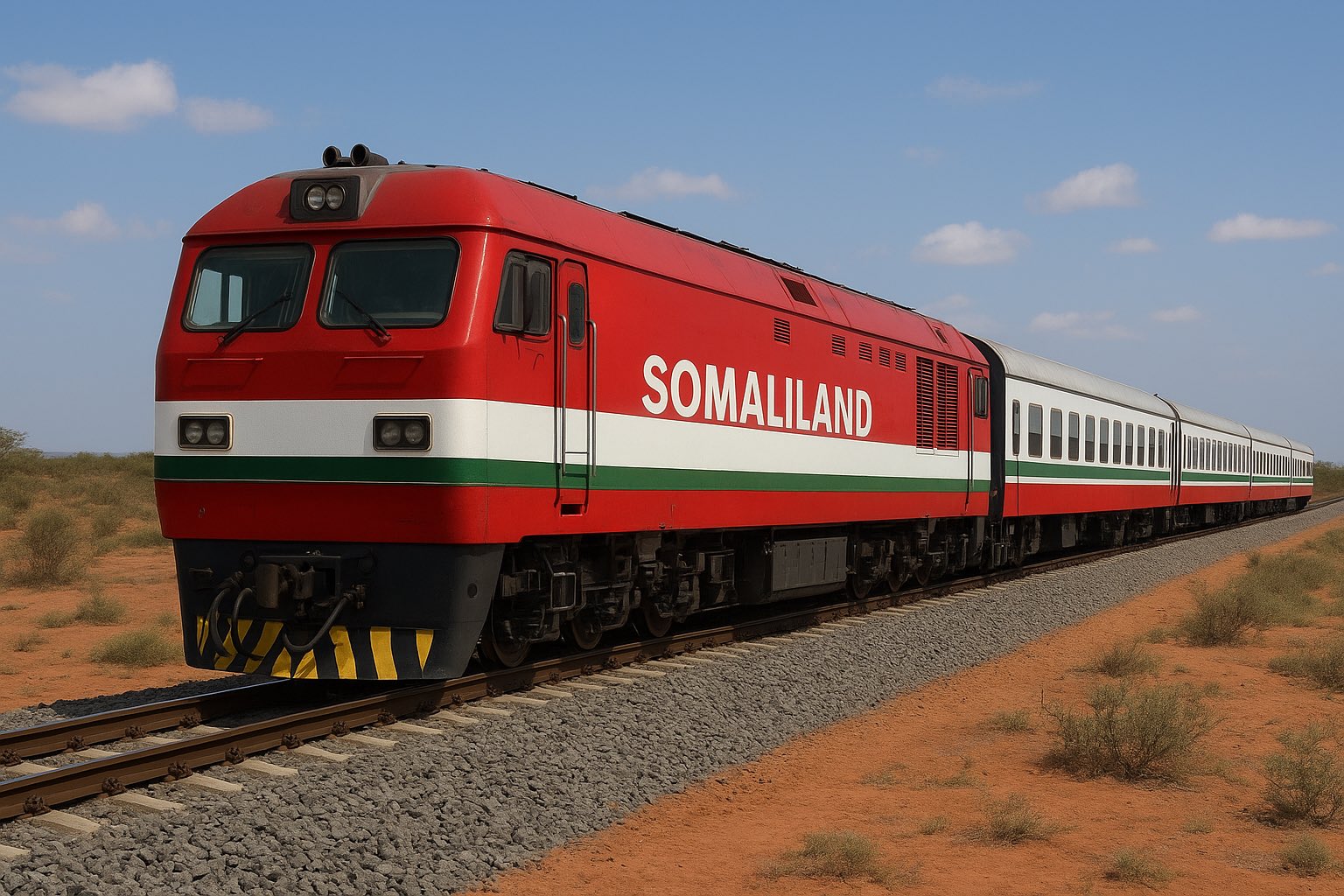
The proposed Ethiopia-Somaliland rail line is a crucial infrastructure project designed to enhance trade and economic cooperation between the two regions. By linking Aysha in Ethiopia to the port city of Berbera in Somaliland, the railway will facilitate Ethiopia’s import and export activities, offering an alternative trade route. This initiative is expected to reduce transportation costs, improve logistics efficiency, and strengthen regional economic ties, ultimately fostering economic growth and development along the corridor.
In early 2025, the United Arab Emirates finalized a $3 billion deal to finance and build this railway, connecting Ethiopia with the Port of Berbera. The line is expected to cover approximately 250–310 km from Berbera to the Ethiopian border, with surveys and planning already underway. The project was formally unveiled during President Abdirahman Irro’s visit to Abu Dhabi, marking a new chapter in regional cooperation and infrastructure development.
Beyond trade, the rail line holds strategic and socio-economic significance:
Alternative to Djibouti: Currently, over 90% of Ethiopia’s maritime trade passes through Djibouti. The Aysha–Berbera line would diversify Ethiopia’s access to the sea, enhancing resilience and reducing dependency on a single port.
Port of Berbera Development: The railway complements ongoing investments in Berbera Port, including DP World’s expansion projects, positioning it as a world-class logistics hub for the Horn of Africa.
Industrial Growth: The corridor will stimulate special economic zones and industrial parks along its route, attracting investment in manufacturing, agro-processing, and logistics. This will create employment opportunities and accelerate urbanization in key towns.
Agricultural and Livestock Exports: Somaliland is a major livestock exporter to the Middle East, while Ethiopia has significant agricultural potential. The railway will streamline the transport of perishable goods, reducing waste and improving access to global markets.
Regional Integration: By connecting Somaliland and Ethiopia more closely, the line strengthens cross-border cooperation and opens new opportunities for regional infrastructure networks that could one day extend to Kenya or even link with continental rail initiatives.
Environmental Impact: Shifting freight transport from roads to rail will significantly reduce carbon emissions, contributing to cleaner air and promoting long-term environmental sustainability.
Investment and Financing: With the UAE’s $3B commitment, the project is expected to attract further capital through public-private partnerships (PPPs), international financial institutions, and bilateral cooperation with key trade partners. This financing mix will ensure feasibility while building international confidence in the project’s long-term value.
Geopolitical Leverage: For Somaliland, participation in a project of this scale underscores its growing importance as a regional trade partner. For Ethiopia, it enhances bargaining power by reducing reliance on one maritime outlet. For the UAE, the deal strengthens its economic and geopolitical footprint in the Horn of Africa.
In conclusion, the Aysha–Berbera Railway Project is not merely a transport link—it is a strategic economic corridor that promises to transform trade flows, stimulate industrialization, promote environmental sustainability, and foster stronger ties between Ethiopia, Somaliland, and the wider Horn of Africa. Backed by the UAE’s $3B investment, its successful implementation will mark a milestone in regional cooperation and economic resilience.
more recommended stories
 My Country, Somaliland, Recognized
Our first embassy will be in.
 The Arithmetic of Erasure: Deconstructing Mogadishu’s Narrative
By Abdiwahab Sancawl When the UN.
 Somaliland Recognition: A Litmus Test for Israel’s Post Gaza Global influence
Israel’s recognition of Somaliland, a long.
-
Awdal’s Strategic Role in Somaliland’s Statehood and National Stability
The people of Awdal, particularly those.