
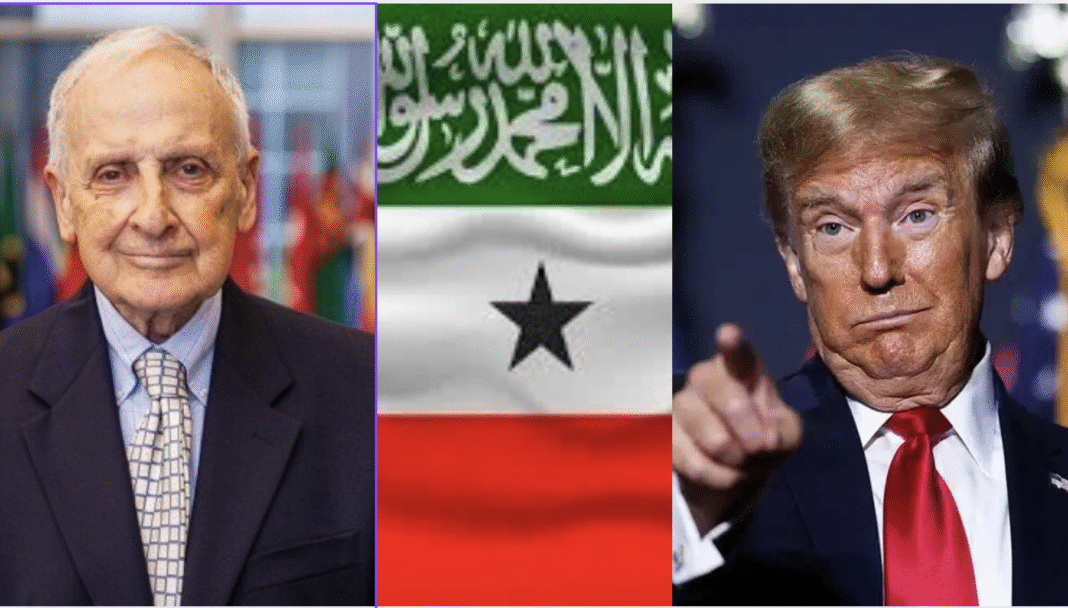
Momentum is building in Washington for the United States to recognize Somaliland as an independent nation, after influential former U.S. diplomat Herman J. Cohen joined Senator Ted Cruz in urging the White House to act.
Cohen, who served as U.S. Assistant Secretary of State for African Affairs from 1989 to 1993, said recognition would advance American interests in the Horn of Africa while countering Beijing’s influence in the region.
“I recommend the State Department proceed with its policy review and formally accept the Republic of Somaliland as a nation,” Cohen wrote on X, citing a report by Semafor.
His call comes days after Senator Ted Cruz, chair of the Senate Foreign Relations Subcommittee on Africa, pressed President Donald Trump to extend formal recognition. Cruz described Somaliland as “a critical security and diplomatic partner for the United States, helping America advance our national security interests in the Horn of Africa and beyond.”
Cruz also warned that China was “using economic and diplomatic coercion to punish Somaliland for its support for Taiwan,” adding that recognition by Washington would help shield the territory from Beijing’s pressure.
Since reclaiming independence in 1991, Somaliland has leveraged its relative stability, democratic governance, and strategic coastline to build ties with international partners across the Global South. Analysts say the territory has become increasingly important amid intensifying geopolitical competition in the Horn of Africa.
President Abdirahman Mohamed Abdillahi “Irro” has been pushing strongly for Somaliland’s recognition after decades of diplomatic isolation. He is expected to meet President Donald Trump in September this year to advance the recognition agenda.
Trump recently told reporters that his administration was “looking into” the recognition issue, remarks welcomed by Somalilanders as a potential breakthrough.
Once the U.S. formally recognizes Somaliland, it will mark a major shift in American policy and could significantly reshape the geopolitical landscape of the Horn of Africa.
more recommended stories
 My Country, Somaliland, Recognized
Our first embassy will be in.
 The Arithmetic of Erasure: Deconstructing Mogadishu’s Narrative
By Abdiwahab Sancawl When the UN.
 Somaliland Recognition: A Litmus Test for Israel’s Post Gaza Global influence
Israel’s recognition of Somaliland, a long.
-
Awdal’s Strategic Role in Somaliland’s Statehood and National Stability
The people of Awdal, particularly those.