
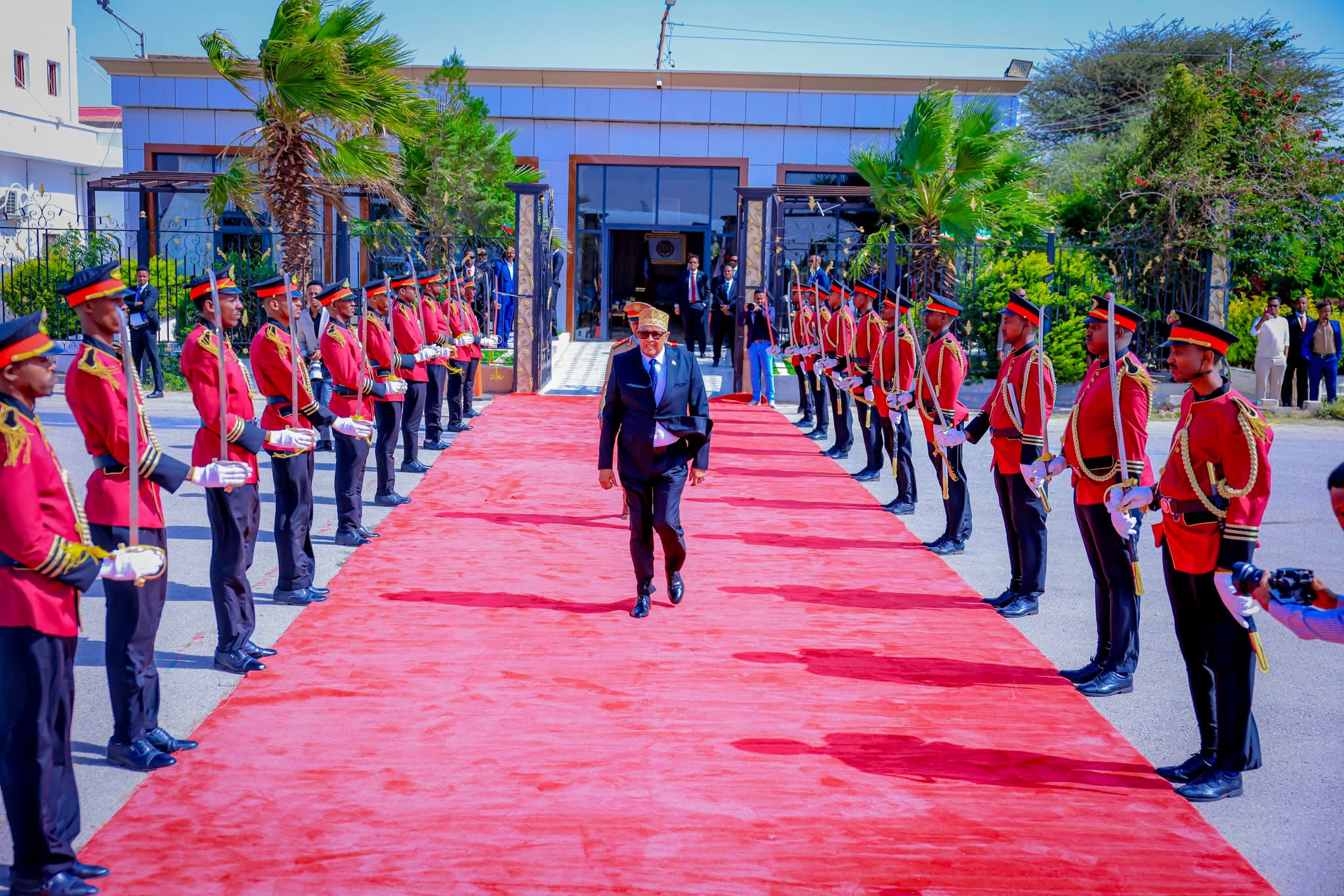
President’s visit to Qatar suggests a willingness to work with any partner whose interests can align with Somaliland’s long-term vision—sovereignty, stability, and economic development.
By Hussein Elmi
When President Abdirahman Mohamed Abdullahi “Cirro” embarked on his surprise visit to Qatar yesterday, 28th June, 2025, it marked more than a diplomatic maneuver—it signaled a deeper shift in Somaliland’s foreign policy posture: from ideological rigidity to strategic pragmatism. In a region dominated by rivalry, loyalty blocs, and transactional politics, Cirro is steering Somaliland toward a more adaptive and interest-driven international approach.
Breaking Away from the Past
For years, Somaliland’s foreign policy largely aligned with Gulf heavyweights such as the United Arab Emirates and Saudi Arabia, especially during the 2017 Gulf Crisis. At the time, the self-declared republic followed the Saudi-UAE axis in its boycott of Qatar—solidifying a relationship that secured economic and infrastructural support (notably the Berbera Port deal).
Cirro’s decision to engage Qatar, despite that history, illustrates a willingness to break from political inertia. He understands that isolation—even principled isolation—comes at a cost. With no formal international recognition and limited access to multilateral institutions, Somaliland must maximize every diplomatic opening. Cirro is doing just that.
Pragmatism Over Partisanship
Rather than treating foreign relations as a zero-sum game, Cirro’s diplomacy shows a realism rarely practiced in the Horn of Africa. His engagement with both Doha and Abu Dhabi suggests a willingness to work with any partner whose interests can align with Somaliland’s long-term vision—sovereignty, stability, and economic development.
Critics argue such moves risk appearing opportunistic or unprincipled. But in Cirro’s case, this flexible diplomacy is a strength, not a weakness. It shows an understanding of how small, unrecognized states can maneuver in an international system that favors recognized powerhouses. Somaliland cannot afford the luxury of picking ideological sides; it must engage with all parties pragmatically.
The President as Somaliland’s Diplomatic Frontman
Cirro has assumed the role of Somaliland’s chief diplomat. His visits to UAE, Djibouti, Qatar, and more recently Kenya, demonstrate a shift toward proactive outreach rather than passive waiting for recognition. He is projecting Somaliland as a peaceful, democratic, and stable actor in a region plagued by volatility. This is no small feat, and it matters greatly for perception—often the most valuable currency for unrecognized states.
More importantly, Cirro is creating a diplomatic architecture in which Somaliland is not defined solely by its relationship with Somalia. Instead, he’s asserting Somaliland as an independent regional stakeholder capable of bilateral ties based on mutual interests—not conflict legacies.
Measured Expectations, Real Gains
To be clear, pragmatism does not guarantee immediate results. Somaliland’s diplomatic breakthroughs won’t come overnight, and there are valid concerns about transparency and follow-through. For example, Cirro’s foreign visits must evolve from symbolic gestures to tangible agreements: infrastructure financing, investment flows, or diplomatic cooperation.
But the strategic importance of shifting the narrative—from marginalization to engagement—is itself a form of diplomatic capital. By keeping doors open in Doha and Nairobi while preserving ties in Abu Dhabi and Addis Ababa, Cirro is building what might be described as constructive ambiguity—engagement without entanglement.
A Model for Regional Diplomacy
Cirro’s approach also sets an example for other emerging entities in Africa. Rather than aligning rigidly with one geopolitical camp, Somaliland is showcasing how to maintain multiple alliances, navigate rivalries, and project agency—even without a UN seat.
This diplomatic balancing act is a far cry from transactional politics. It is, at its best, a form of principled pragmatism—anchored in Somaliland’s national interests but open to new partnerships that can strengthen them.
Foreign Policy as a Tool for Recognition and Growth
President Cirro’s diplomatic style is not built on flashy promises or revolutionary rhetoric. It’s built on quiet consistency, calculated risk, and a willingness to sit at any table that can advance Somaliland’s case.
In a world where legitimacy is often shaped by visibility and relationships, Cirro’s pragmatism is Somaliland’s clearest path forward. It’s not about chasing validation; it’s about creating value—for citizens, for partners, and for a nation still waiting to be seen.
more recommended stories
 My Country, Somaliland, Recognized
Our first embassy will be in.
 The Arithmetic of Erasure: Deconstructing Mogadishu’s Narrative
By Abdiwahab Sancawl When the UN.
 Somaliland Recognition: A Litmus Test for Israel’s Post Gaza Global influence
Israel’s recognition of Somaliland, a long.
-
Awdal’s Strategic Role in Somaliland’s Statehood and National Stability
The people of Awdal, particularly those.