
By Abdi Jama | Expert in Governance, Diplomacy & Horn of Africa Affairs | June 29, 2025
Introduction
In the intricate and often paradoxical theatre of international politics, entities that exist outside the formal architecture of recognition must rely not on status, but on strategy. Their currency is not codified sovereignty, but coherence of vision, institutional resilience, and the artful practice of diplomacy under constraint.
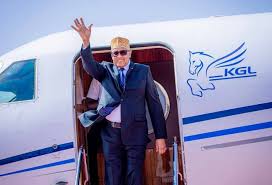
On June 28, 2025, the Republic of Somaliland crossed a threshold of symbolic and strategic consequences. Its newly elected President, Dr. Abdirahman Mohamed Abdillahi “Irro,” undertook an official visit to the State of Qatar—invited not by a neutral intermediary, but by a government long seen as a staunch ally of Mogadishu and a champion of Somali unity. The implications of such an overture are not lost on seasoned observers.
The true weight of this moment lies not in ceremony, but in its timing. For over three decades, Somaliland has pursued sovereign statehood absent formal recognition—relying instead on the legitimacy conferred by internal order, electoral continuity, and pragmatic governance. The visit to Doha signals a maturation of Somaliland’s foreign policy—from a posture of endurance to one of calculated engagement. It is a shift from waiting to shaping, from marginal presence to regional actorhood.
The Sovereignty Dilemma: A State Without a Seat
Somaliland’s case is among the more anomalous in international diplomacy. Born of a voluntary union on July 1, 1960, between the newly independent State of British Somaliland—having attained its sovereignty from the United Kingdom on June 26, 1960—and the Italian-administered Trust Territory of Somalia, the Somali Republic was envisioned as a unified nation for all Somali people. However, the union was hastily implemented without a formal legal framework or constitutional ratification process, leaving critical issues of power-sharing and state structure unresolved. Over the ensuing decades, the imbalance in governance, marginalization of the north, and authoritarian rule—culminating in the atrocities of the Siad Barre regime—deepened regional grievances. In 1991, as the Somali Republic disintegrated into civil war following Barre’s ousting, Somaliland unilaterally withdrew from the union and reasserted its sovereignty, citing the voluntary nature of its original accession and the complete collapse of the constitutional order that once bound the union together.
Since then, it has built its own institutions, maintained internal order, and conducted regular elections. Yet it remains excluded from the international system—not because of internal deficiencies, but due to the inertia of inherited norms on post-colonial borders and fears of precedent.
This diplomatic exclusion has not deterred Somaliland’s leaders from seeking engagement. On the contrary, it has forged a political elite adept in the arts of patience and persuasion—qualities reminiscent of smaller European states that navigated the Cold War not by strength, but by strategic equilibrium.
Why Qatar? A Calculated Risk in a Divided Gulf
To grasp the full significance of Qatar’s overture, one must view it against the backdrop of the Gulf’s intricate rivalries and overlapping spheres of influence. Doha has historically aligned itself with the Federal Government of Somalia, often championing the sanctity of Somali territorial integrity in regional and international forums. That now extends a formal invitation to the leadership of Somaliland is not a diplomatic oversight—it is either a recalibrated posture or a deliberate tactical maneuver.
For Hargeisa, this development underscores the political acumen of President Irro, a statesman whose diplomatic sensibilities have been honed not in grand halls of recognition, but in the subtleties of marginal status and strategic patience. His acceptance of the invitation suggests a shift in Somaliland’s self-conception: not as a peripheral bystander to Somalia’s recovery, but as an autonomous political entity capable of engaging regional powers on its own terms.
In the lexicon of realist diplomacy—where interests, not sentiment, drive alliances—Somaliland’s engagement with Qatar does not constitute a rupture with existing partners, but rather a deliberate broadening of its strategic architecture. In the fluid geometry of Gulf politics, this move reflects neither recklessness nor desperation, but calculated assertion: a message that Somaliland intends to navigate its diplomatic future with agency, flexibility, and an unflinching grasp of regional dynamics.
Strategic Calculus and Diplomatic Leverage
For entities operating outside the formal bounds of state recognition, the genius of diplomacy lies not in protest, but in the quiet construction of alternatives. Qatar’s overture—whether exploratory or methodically orchestrated—offers Somaliland not merely symbolic acknowledgment, but strategic leverage within a rigid international order. In the idiom of classical diplomacy, such engagements are rarely spontaneous; they are often the visible manifestation of subterranean interests converging toward utility.
Somaliland must now use this juncture not to reiterate its historical grievance, but to recalibrate its narrative. Rather than frame its position as secessionist, it must invoke a doctrine of negotiated disengagement—a construct grounded in constitutional collapse, historical voluntarism, and the pursuit of regional equilibrium. In doing so, it transforms itself from a claimant to a precedent.
Qatar, in this configuration, is not a benefactor but a vector—a conduit through which Somaliland’s case can be subtly internationalized without rupturing the global consensus on territorial sovereignty. If managed with intellectual restraint and strategic consistency, this moment may allow Somaliland to ascend from silence into the realm of structured dialogue—on terms of its own articulation.
Economic Dimensions of Political Gestures
If diplomacy is the architecture through which recognition is negotiated, then economics constitutes the scaffolding upon which enduring legitimacy is constructed. Qatar’s expansive sovereign wealth, its infrastructural activism across Africa, and its growing appetite for strategic footholds along maritime corridors make it an actor of consequence—particularly for aspirant states like Somaliland.
For Somaliland, the prospect is not merely one of capital infusion, but of geopolitical anchoring through visible transformation. Investments in critical infrastructure—whether in transport, energy, or digital networks—offer a tangible affirmation of statehood in function, if not in title. Likewise, access to Qatar’s livestock markets, its regional logistics platforms, and its sophisticated Islamic financial instruments provides Somaliland with avenues for integration that do not demand ideological submission.
These are not charitable overtures but calculated transactions: Qatar seeks geopolitical influence; Somaliland seeks recognition through relevance. If pursued with strategic sobriety, this convergence can yield a framework in which both parties achieve their aims—not as patron and client, but as participants in a mutually reinforcing compact.
Risk Equilibrium and Strategic Restraint
No strategic pivot is without attendant risks. As Somaliland seeks to widen its diplomatic aperture, it must remain acutely aware of the balance it treads. Longstanding allies—most notably the United Arab Emirates, whose investments in Berbera underpin key economic and geopolitical stakes—must not be alienated in the wake of new engagements. Nor can Somaliland allow itself to be perceived as a proxy in the intensifying rivalries that define Gulf geopolitics.
The craft of diplomacy, as the history of small states teaches, lies not merely in securing new friends, but in sustaining a posture of principled autonomy. President Irro, cognizant of this delicate calculus, must respond to Qatar’s overture without tilting the strategic balance. His task is not to choose sides, but to institutionalize a diplomatic posture that signals Somaliland’s openness to all who approach it on the basis of mutual respect and sovereign parity.
Toward a Doctrine of Constructive Engagement
Though still nascent in its outcomes, the visit to Qatar may well constitute the embryonic expression of a grander doctrine—one of constructive engagement forged in the crucible of realism, economic complementarity, and strategic non-alignment.
If Somaliland can sustain this trajectory—anchoring internal governance reforms with external diplomatic expansion, it may not need to petition for recognition. Rather, recognition, or its functional equivalent, may emerge organically, born not of sentiment but of necessity—recognized by the very system that once resisted it.
In such a paradigm, the central question will no longer be whether Somaliland qualifies for statehood under classical definitions, but whether the international system can afford to ignore its sovereign reality without imperiling its own coherence and moral consistency.
About the Author:
Abdi Jama is a seasoned expert in development, humanitarian efforts, and political systems in East Africa. He offers in-depth analysis on governance, regional diplomacy, and leadership dynamics in the Horn of Africa. For inquiries, contact: abdi.jama@gmail.com
more recommended stories
 My Country, Somaliland, Recognized
Our first embassy will be in.
 The Arithmetic of Erasure: Deconstructing Mogadishu’s Narrative
By Abdiwahab Sancawl When the UN.
 Somaliland Recognition: A Litmus Test for Israel’s Post Gaza Global influence
Israel’s recognition of Somaliland, a long.
-
Awdal’s Strategic Role in Somaliland’s Statehood and National Stability
The people of Awdal, particularly those.