
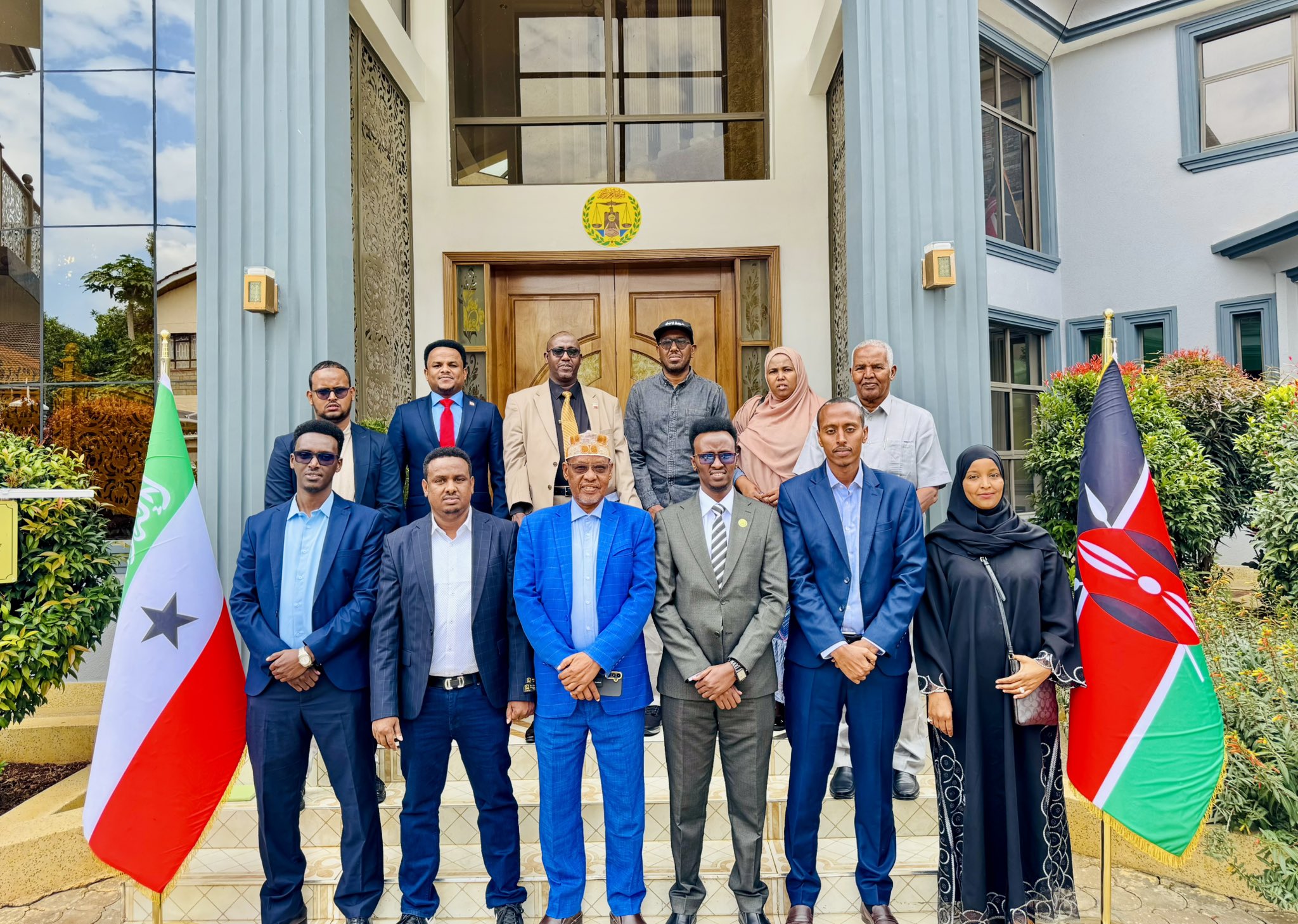
A high-level delegation from Somaliland, led by the Minister of Agricultural Development, Hon. Mahamoud Egeh Yousuf, successfully concluded a biannual review meeting of the Somaliland Food Systems Resilience Program (SL-FSRP) in Nairobi. The delegation included senior officials from the Ministry of Environment and the Ministry of Livestock, highlighting a broader agenda of regional cooperation.
Their visit to Kenya focused on strengthening collaboration in agriculture, climate action, and livestock development—key pillars of Somaliland’s sustainable development strategy.
The SL-FSRP review meeting, held at the prestigious Sarova Panafric Hotel, assessed the program’s progress over the past six months and outlined strategic plans for the next implementation phase.
The consultative meeting brought together key stakeholders, including members of the SL-FSRP Project Coordination Committee and World Bank representatives, to review achievements and refine strategies moving forward.
In his remarks, Minister Yousuf expressed deep appreciation for the World Bank’s continued support and highlighted Somaliland’s commitment to effective project implementation. “Somaliland’s stability and capacity to manage and monitor development projects makes it a reliable partner for initiatives like the SL-FSRP,” he said. He emphasized the program’s vital role in enhancing agricultural productivity and promoting sustainability.
Among those in attendance were senior World Bank officials from the Nairobi office, including Jeehye Kim, the lead coordinator for the FSRP. Discussions focused on the program’s tangible impacts on local communities and its alignment with Somaliland’s broader development goals.
The Food Systems Resilience Program (FSRP), funded by the World Bank, is a five-year initiative implemented by the Somaliland Ministry of Agricultural Development (MoAD). It is designed to address the structural causes of food insecurity and reduce communities’ vulnerability to climate shocks, crises, and conflict.
more recommended stories
 My Country, Somaliland, Recognized
Our first embassy will be in.
 The Arithmetic of Erasure: Deconstructing Mogadishu’s Narrative
By Abdiwahab Sancawl When the UN.
 Somaliland Recognition: A Litmus Test for Israel’s Post Gaza Global influence
Israel’s recognition of Somaliland, a long.
-
Awdal’s Strategic Role in Somaliland’s Statehood and National Stability
The people of Awdal, particularly those.