
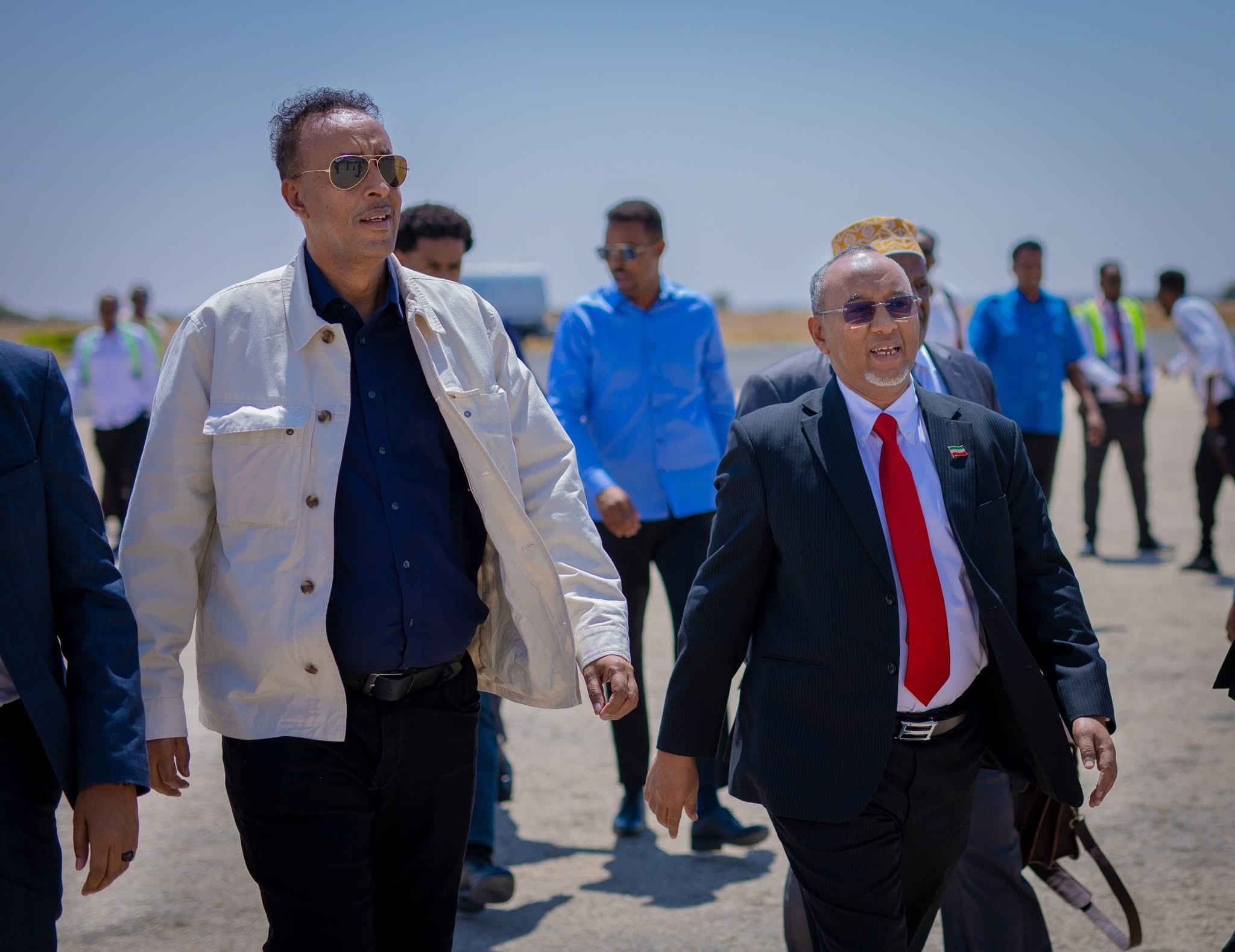
The Chairman of Somaliland’s ruling Waddani Party, Hon. Hirsi Ali Haji Hassan, returned to Hargeisa following an official tour of several African countries, during which he met key political figures and discussed Somaliland’s diplomatic engagements.
At the Waddani Party headquarters in Hargeisa, senior party officials, government representatives, and supporters attended a briefing where Chairman Hirsi outlined the objectives and outcomes of his trip.
During his tour, Hirsi visited Kenya, South Africa, and Ethiopia. In Nairobi, he attended a ruling party ceremony and met with Kenyan President William Ruto. In South Africa, he held discussions with senior officials from the country’s ruling party on political and economic cooperation. In Ethiopia, he joined the Somaliland Presidential delegation in high-level talks on regional relations and stability.
In his address, Hirsi provided an overview of the diplomatic mission, stating that it focused on strengthening Somaliland’s political and economic partnerships across Africa and building support for its international recognition efforts.
He also commented on the airspace dispute between Somaliland and Somalia, which has intensified in recent weeks following reports of administrative interference by the Somali Federal Government through the International Civil Aviation Organization (ICAO). Hirsi criticized what he termed as “unwarranted interference” and called for a unified national approach to defending Somaliland’s airspace management rights.
“Those who created the airspace problem in the past have no moral ground to speak today,” he said. “President Hassan Sheikh and his administration must understand that continued interference in Somaliland’s affairs will have consequences.”
Addressing the recent e-visa issue, Hirsi expressed concern over reports that several airlines have refused to board passengers traveling to Hargeisa without Somali-issued electronic visas. He described the situation as “disruptive” and urged the Somaliland government to engage international aviation and diplomatic channels to resolve the matter.
“The e-visa issue should not be used as a political tool,” Hirsi said. “Travelers bound for Somaliland should not face unnecessary restrictions or confusion.”
The event concluded with brief remarks from other Waddani officials and government representatives, who discussed the importance of coordinated diplomacy in addressing both the airspace and e-visa challenges while maintaining Somaliland’s sovereignty and regional partnerships.
more recommended stories
 My Country, Somaliland, Recognized
Our first embassy will be in.
 The Arithmetic of Erasure: Deconstructing Mogadishu’s Narrative
By Abdiwahab Sancawl When the UN.
 Somaliland Recognition: A Litmus Test for Israel’s Post Gaza Global influence
Israel’s recognition of Somaliland, a long.
-
Awdal’s Strategic Role in Somaliland’s Statehood and National Stability
The people of Awdal, particularly those.