
By A. Jama
In the turbulent waters of the Horn of Africa, a region synonymous with geopolitical fault lines and maritime peril, stability is the rarest and most valuable of currencies. For decades, the headlines have been dominated by piracy, the collapse of states, and the jostling of global powers for military footholds. Yet, amid this storm, Somaliland has quietly and methodically transformed itself into the region’s unseen anchor. For over thirty years, it has offered something extraordinary, something that superpowers and international organizations have spent billions trying to create elsewhere: organic, homegrown predictability. This is not an accident of history; it is the result of a deliberate, foundational choice to prioritize security and governance above all else—a choice that now holds profound strategic importance for the entire world.
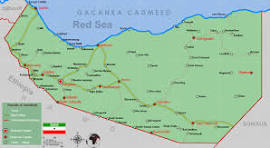
Somaliland’s 850-kilometer coastline is a simple geographic fact, but its responsible stewardship of that coastline is a major strategic accomplishment. It sits astride one of the most critical maritime chokepoints on the planet, the Bab el-Mandeb Strait—the southern entrance to the Red Sea. This narrow channel is the artery connecting the Indian Ocean to the Mediterranean via the Suez Canal. A staggering volume of global commerce, with credible estimates valuing the annual flow of goods at well over $1 trillion, funnels through these waters every day. Any disruption here—whether from pirates, terrorists, or state-level conflict—sends immediate shockwaves through the global economy. While its neighbors have been consumed by internal strife or have become theaters for external competition, Somaliland has focused inward, painstakingly building the institutions necessary to secure its own territory, both on land and at sea.
This was a conscious policy of insulation and inoculation against the chaos that engulfed Somalia after 1991. The first and most critical task of the newly declared state was disarmament. Through a series of community-led reconciliation conferences, clan militias were demobilized and integrated into a national police force and army. This bottom-up process, driven by traditional elders rather than foreign peacekeepers, created a security apparatus with deep local legitimacy. Consequently, Somaliland’s coast guard and security forces, though modestly equipped by international standards, have been remarkably effective. They have successfully prevented the scourge of Somali piracy from taking root in their waters and have been a vigilant partner in combating extremism, creating a vital buffer zone of stability.
Contrast this with the prevailing model in the region. Nearby Djibouti, for instance, has leveraged its strategic location to become a landlord for a dense patchwork of foreign military bases, hosting forces from the United States, China, France, and Japan. This has brought in revenue, but it has also made Djibouti a focal point of great-power competition. Somaliland has pursued a different, more independent path. It has engaged pragmatically with international partners—most notably the United Arab Emirates in the development of the Berbera port and airport—but it has steadfastly resisted becoming a pawn in anyone else’s game. Its foreign policy is centered on the clear-eyed pursuit of trade, investment, and development, not on entangling military alliances. This strategic autonomy is a source of immense strength, allowing it to be perceived as a neutral and reliable partner for all legitimate actors.
For Western nations, global shipping lines, and insurance underwriters, the value proposition should be self-evident. In a region where security is fragile and alliances are constantly shifting, Somaliland offers a partner that is consistent, capable, and ideologically aligned with the core principles of free and secure navigation. It has demonstrated—not with rhetoric but with a three-decade track record—that it is a net contributor to regional security. Bolstering its capacity—through enhanced training for its coast guard, better equipment for its security forces, and intelligence-sharing partnerships—is not an act of charity. It is a direct, cost-effective investment in global maritime security and supply chain resilience.
The world is slowly, belatedly, waking up to this reality. As the Red Sea becomes an increasingly contested space, the quiet competence of Hargeisa looks more and more attractive. Somaliland proves that the most powerful strategic asset is not a foreign base or a sophisticated weapon system, but a government that enjoys the trust of its people and effectively controls its territory. It is the unseen anchor in a stormy sea—a force for stability that has earned its place as a recognized and respected partner. It is time the world’s strategic maps reflected this crucial reality.
more recommended stories
 My Country, Somaliland, Recognized
Our first embassy will be in.
 The Arithmetic of Erasure: Deconstructing Mogadishu’s Narrative
By Abdiwahab Sancawl When the UN.
 Somaliland Recognition: A Litmus Test for Israel’s Post Gaza Global influence
Israel’s recognition of Somaliland, a long.
-
Awdal’s Strategic Role in Somaliland’s Statehood and National Stability
The people of Awdal, particularly those.