
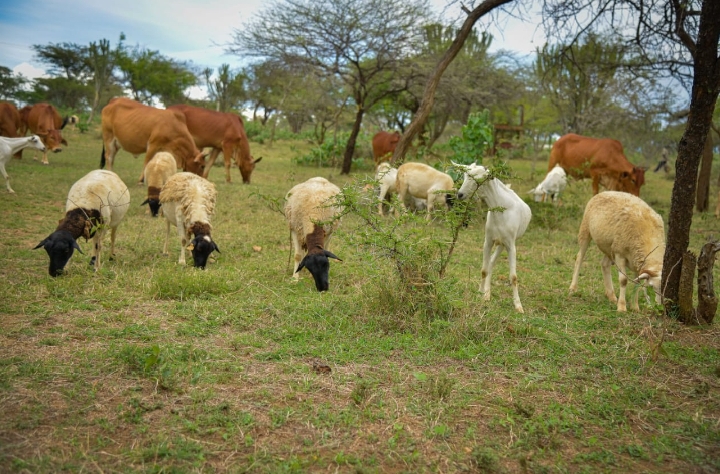
In the arid yet enduring terrain of Somaliland, livestock is more than just an economic activity—it is a way of life. For the vast majority of rural households, pastoralism and agro-pastoralism form the backbone of survival, cultural identity, and social cohesion.
Livestock: The Lifeblood of the Economy
Sheep, goats, camels, and cattle are herded across the country’s dry plains. Among these, sheep and goats dominate, accounting for an estimated 91% of all animal exports. Each year, millions of these animals are shipped to Gulf countries, generating vital foreign exchange that powers local markets and livelihoods. In many Somali households, wealth is measured in hooves. Livestock are central to marriage dowries, conflict resolution, and day-to-day economic stability.
The Threat: Climate and Land Pressure
Despite its vital importance, the livestock sector is increasingly under threat. Recurrent droughts, worsened by climate change, have led to severe pasture and water shortages, causing widespread livestock mortality. At the same time, overgrazing and poor land management are degrading already fragile ecosystems, accelerating desertification, and reducing the land’s carrying capacity. Natural grazing alone is no longer sufficient. The quality and quantity of forage have declined sharply, leaving pastoral communities vulnerable and livestock more prone to disease and starvation.
The Solution: A Shift Toward Fodder Cultivation
To sustain livestock production and secure pastoral livelihoods, intentional fodder cultivation must become a national priority. Establishing local sources of nutritious, drought-resistant fodder will not only combat feed shortages but also help reverse land degradation and restore vegetation cover. Species such as:
-Cenchrus ciliaris (Buffel grass)
-Panicum antidotale (Blue panicum)
-Lablab purpureus (Lablab)
-Napier grass
…have proven effective in similar arid zones and should be widely promoted across Somaliland’s rangelands. Furthermore, traditional grasses can be harvested during rainy seasons, dried, and stored as hay reserves for the dry months—creating a year-round feed supply. This practice has been successfully implemented in places like Marsabit County, Northern Kenya, where the Tullu Pastures Cooperative, led by local women, has transformed fodder production into a thriving micro-enterprise.
Action Steps: Building Capacity and Climate Resilience
To achieve this transformation, coordinated efforts are needed to:
-Train pastoralists in water harvesting and conservation farming
-Establish demonstration plots for fodder species
-Promote community-based cooperatives for hay storage and sale
-Encourage public-private partnerships in fodder seed supply and extension services.
Conclusion:
Pastoralism has long been the heartbeat of Somaliland’s economy. But without immediate action, this vital sector risks collapse. Investing in fodder production is not just an agricultural intervention—it is a strategic response to climate change, food security, and rural resilience. By empowering pastoralists with the tools to adapt, Somaliland can ensure that its most valuable economic and cultural resource—its livestock—continues to thrive for generations to come.
more recommended stories
 My Country, Somaliland, Recognized
Our first embassy will be in.
 The Arithmetic of Erasure: Deconstructing Mogadishu’s Narrative
By Abdiwahab Sancawl When the UN.
 Somaliland Recognition: A Litmus Test for Israel’s Post Gaza Global influence
Israel’s recognition of Somaliland, a long.
 Bridging the Horn: A Democracy Forged, Not Granted
By: A. Jama In the global.