
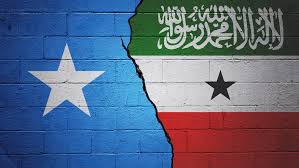
Despite decades of international support, Somalia remains entrenched in crisis. Security threats persist, and political fragmentation is worsening. However, the Federal Government in Mogadishu has repeatedly failed to develop a road map for national stability. Instead of focusing on mending internal divisions and addressing the country’s pressing issues, the current administration has concentrated on destabilizing relatively peaceful regions and interfering in Somaliland, a territory it has neither governed nor influenced for decades.
Insecurity Persists, But Mogadishu Remains Focused Elsewhere
Somalia’s security situation is far from under control. Al-Shabaab continues to pose a serious threat, orchestrating attacks not only in rural areas but also in the heart of Mogadishu. Despite years of promises to rebuild the Somali National Army, real progress remains elusive. The planned exit of ATMIS (African Union peacekeepers) is approaching, yet the federal government has made no credible preparations to address the resulting vacuum.
Instead of concentrating efforts on securing the capital or strengthening local security forces, the administration appears preoccupied with political manipulation. It has sought to interfere in the affairs of peaceful federal member states, undermining their stability through orchestrated leadership crises, political coercion, and financial manipulation.
Federal Fragmentation Worsens
Rather than fostering national unity, the federal government’s approach has exacerbated divisions among its federal states. Key federal states have entirely distanced themselves from the flawed federal process. Trust between Mogadishu and these states has reached an all-time low.
Instead of initiating a national dialogue to tackle the constitutional and power-sharing issues at the core of Somalia’s dysfunction, the federal leadership has opted for confrontation over cooperation. It views the federal system as a threat to its authority rather than as an opportunity to establish a decentralized and inclusive governance model.
The Obsession with Somaliland
One of the most telling examples of the federal government’s misguided priorities is its disproportionate and persistent obsession with Somaliland. Rather than addressing the escalating security crisis, political fragmentation, and institutional paralysis in the south, the federal authorities in Mogadishu have continually diverted diplomatic and political energy toward reclaiming a territory that has effectively governed itself for over three decades.
Somaliland declared its independence in 1991 following the collapse of the Somali Republic. Since then, it has established a functioning political system, conducted multiple peaceful transfers of power through democratic elections, and maintained internal peace and security—achievements that remain elusive in much of southern Somalia. Nevertheless, Mogadishu continues to issue assertive communiqués, claim legal authority over Somaliland, and occasionally hold token “talks” that lack seriousness, substance, or legitimacy.
This fixation is not only unproductive—it is fundamentally hypocritical. How can a federal government that has failed to organize national elections, cannot secure the streets of its own capital, and remains at odds with its federal member states presume to speak with moral or political authority about the future of Somaliland? Such posturing not only lacks credibility but also reveals the hollowness of Mogadishu’s claims to national unity.
Moreover, this aggressive stance toward Somaliland undermines any remaining hope for dialogue. Somalilanders, having built their institutions from the ground up, view these attempts as thinly veiled efforts to undo their hard-won gains and subsume them under a failed state apparatus. Instead of treating Somaliland as a partner in regional peace, the federal government regards it as a threat to its own fragile legitimacy.
The Somali people, along with an increasingly concerned international community, are recognizing the contradiction in this approach. They are posing a critical question: If Mogadishu cannot unify or engage constructively with its own constituent states, how can it claim the capacity—or the right—to govern a territory that has demonstrated greater stability, inclusivity, and democracy? Until this question is addressed honestly, the federal government’s attempts to reassert control over Somaliland will remain not only futile but also counterproductive.
Time for a Reckoning
Somalia is at a crossroads. The challenge to progress does not stem from external actors or regional rivals, but rather from a lack of responsible leadership within the country. The federal government must shift its focus inward, prioritizing security reform, political reconciliation, constitutional clarity, and inclusive governance.
Continued attempts to destabilize functioning regions or exert control over Somaliland from a distance will only result in further failure. Somalia’s recovery relies not on bravado or coercion, but on humility, dialogue, and a commitment to lead by example. Without this shift, the country risks further fragmentation, leaving the dream of a peaceful, united Somalia tragically out of reach.
In this context, the international community must reconsider its stance on Somaliland. For over three decades, Somaliland has maintained peace, democratic governance, and a functioning state apparatus despite lacking international recognition. While Mogadishu has struggled to secure its capital and unify its federal system, Somaliland has demonstrated political maturity and institutional resilience. Denying recognition to such a stable and self-reliant entity not only contradicts the principles of self-determination but also overlooks a potential pillar of peace in the Horn of Africa.
World governments must acknowledge the reality: Somaliland is not part of the Somalia conflict; it is part of the solution. Internationally recognizing Somaliland would not destabilize the region; rather, it would validate a success story born from local initiative and grassroots governance. It is time to reward peace, not chaos. The people of Somaliland have earned the right to recognition through their actions, and the global community must respond with fairness, vision, and courage.
By: Said W. Hersi
Researcher and Expert in Strategic Leadership, Organizational Transformation, and Human Capital Development
Email: swarsame2@yahoo.com
more recommended stories
 My Country, Somaliland, Recognized
Our first embassy will be in.
 The Arithmetic of Erasure: Deconstructing Mogadishu’s Narrative
By Abdiwahab Sancawl When the UN.
 Somaliland Recognition: A Litmus Test for Israel’s Post Gaza Global influence
Israel’s recognition of Somaliland, a long.
-
Awdal’s Strategic Role in Somaliland’s Statehood and National Stability
The people of Awdal, particularly those.